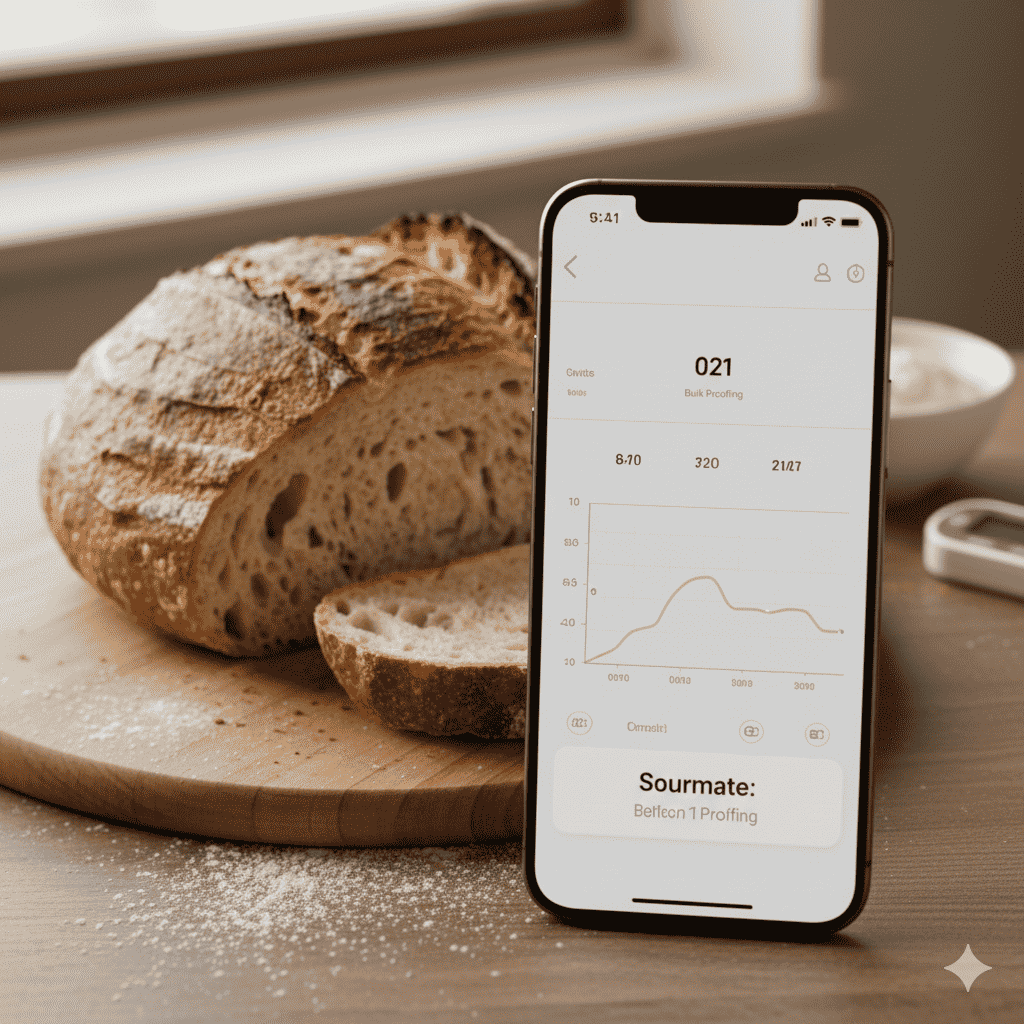
Stop Guessing, Start Baking: Why Timing is Everything in Sourdough
Most sourdough fails aren't due to bad recipes, but bad timing. Learn how temperature and hydration dictate your bake, and how to finally master your kitchen schedule.
Every sourdough baker has been there: It’s 11 PM, you’re exhausted, but your dough is nowhere near ready for the fridge. Or worse, you wake up to a collapsed, over-proofed mess because the kitchen was warmer than you thought.
Sourdough is a living thing. Unlike commercial yeast, which acts like a predictable machine, wild yeast is moody. It’s influenced by three main factors that are constantly changing:
Ambient Temperature: A 2°C difference can swing your bulk fermentation time by hours.
Water Hydration: Higher hydration speeds up fermentation but makes the dough harder to handle.
Starter Activity: How "peaky" was your starter when you mixed the levain?
The "Watcher's" Fatigue
For years, the advice has been "watch the dough, not the clock." While true, it’s also impractical for anyone with a job, kids, or a life outside the kitchen. We shouldn't be slaves to our fermentation.
Bridging the Gap Between Intuition and Data
This is exactly why I started building Sourmate. I wanted to take the "what if" out of the equation. By calculating the relationship between your specific kitchen temperature and your dough's hydration, we can move away from guessing and toward a predictable, repeatable schedule.
In this blog, I’ll be sharing:
Deep dives into "Baker's Math" made simple.
Guides on troubleshooting common sourdough struggles.
Updates on how Sourmate is evolving to help you bake the perfect loaf, every time.
Sourdough doesn't have to be a gamble. It’s a craft, and every craftsman deserves the right tools.
Happy baking!