The Science of Hydration: How Water Percentage Changes Your Crumb (and How to Tame It)
Want a lighter sourdough loaf with an open, lacy crumb? Increasing hydration is key, but pushing water percentage too far can ruin your dough. Learn how hydration affects dough structure, why flour quality matters, and how to master wet doughs without losing control over your bake.
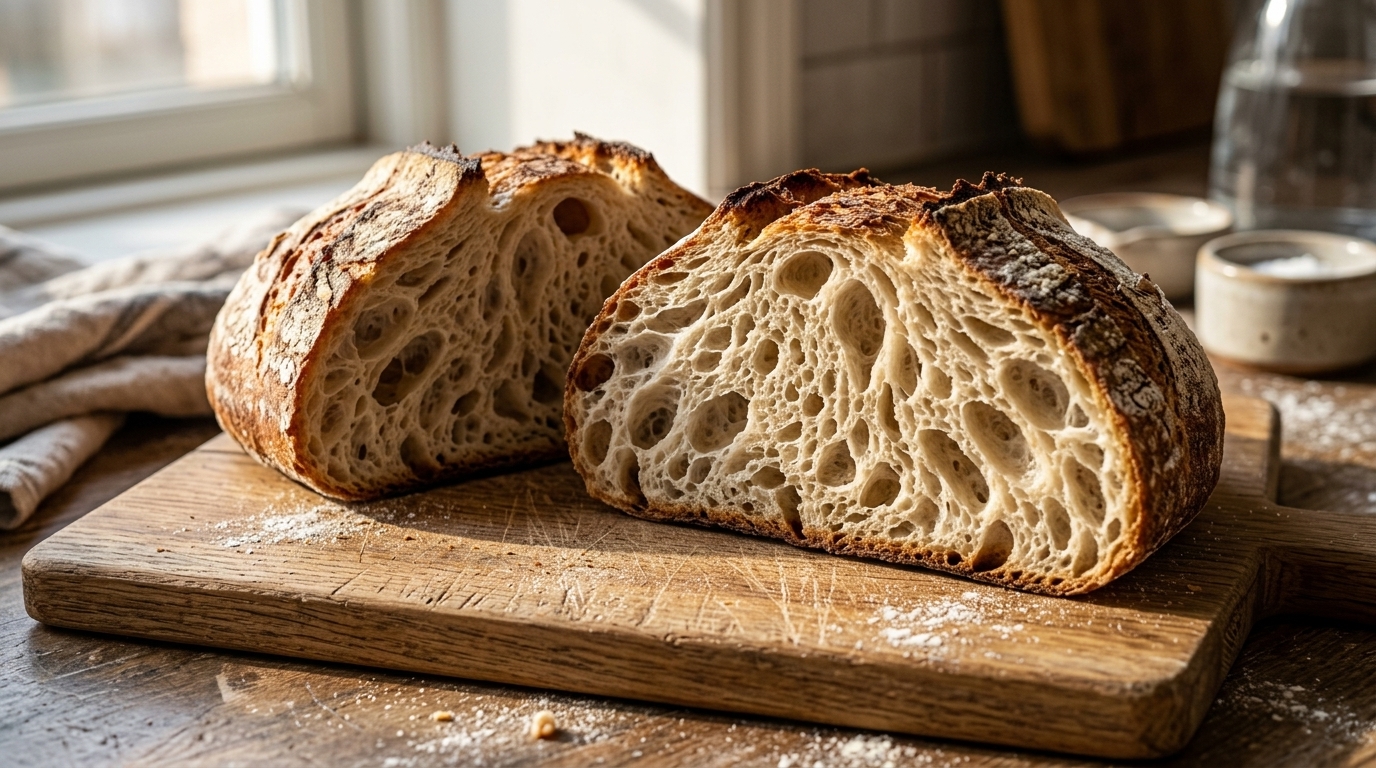
Achieving an open, lacy crumb with a crisp, blistered crust is often seen as the holy grail of sourdough baking. Naturally, the common advice you'll hear is simple: just increase the hydration.
While adding more water can yield a lighter crumb, high-hydration doughs are notoriously unforgiving. If you push the water percentage too far without adjusting your technique or flour selection, you end up with a sticky, flat pancake instead of an airy loaf.
Here is a breakdown of how hydration affects your bake and how to control the variable.
What Does Hydration Actually Mean? Hydration is the total weight of water relative to the total weight of flour in your recipe, expressed as a percentage. A 70% hydration recipe means 700g of water for every 1000g of flour.
Lower Hydration (60% – 68%): Easier to handle, holds shape effortlessly during shaping, and produces a tighter, more uniform crumb. Ideal for sandwich loaves or complex scoring patterns.
Medium-High Hydration (70% – 75%): The sweet spot for many home bakers. Offers a good balance between an open structure, strong oven spring, and manageable dough handling.
High Hydration (78%+): Requires strong, high-protein flour and precise gluten development. Produces large, translucent air pockets, but demands speed and confidence during shaping.
3 Factors That Determine How Much Water Your Dough Can Hold
Flour Protein & Absorption Capacity
Not all flours are created equal. A strong flour with high protein quality absorbs water quickly and holds structure under stress. Lower-protein flours will feel sticky and lose strength at the exact same hydration level.
Gluten Development Technique
Water dilutes gluten networks. To compensate for high water content, you need active gluten development early on—utilizing techniques like an extended autolyse, coil folds, or a spiral mixer routine to build initial dough strength.
Fermentation Control
High hydration speeds up fermentation. Over-proofing a wet dough destroys its structural matrix, leading to a dough that collapses the moment it hits the baking stone.
Stop Guessing, Start Tracking Changing your hydration level changes every other step in your baking workflow—from fermentation time to shaping technique.
To master high hydration, stop treating water content as an isolated variable. Track your flour types, hydration ratios, room temperatures, and bulk rise percentages. When you find the exact hydration sweet spot for your local flour and environment, document it so you can replicate that perfect bake every single time.
What hydration percentage are you currently baking with? Let us know in the comments below!